Table of Contents
ToggleStone countertops are the workhorse of any outdoor kitchen, handling sun, rain, temperature swings, and the occasional spill without breaking a sweat. Whether you’re building a grilling station on a modest patio or a full-service entertaining hub, choosing the right stone material sets the tone for durability, maintenance demands, and your entire design direction. This guide walks you through the most practical stone options available today, from granite’s proven longevity to budget-friendly slate, so you can make a choice that fits both your space and your lifestyle.
Key Takeaways
- Stone for outdoor kitchen countertops offers unmatched durability, weather resistance, and minimal maintenance compared to wood or composite materials, making it the preferred choice for long-term entertaining spaces.
- Granite is the gold standard with a Mohs hardness of 7–7.5, heat resistance, and hundreds of design options, though it costs $40–$100+ per square foot and requires resealing every 1–3 years.
- Slate and travertine provide distinctive character and visual appeal at $30–$60 per square foot but demand frequent sealing and careful maintenance in freeze-thaw climates to prevent damage.
- Bluestone and flagstone deliver budget-friendly durability at $25–$50 per square foot for low-freeze climates, though they require mandatory sealing and show more visible patina over time.
- Proper installation—including correct slope for drainage, solid substrate, and climate acclimation—is critical to prevent cracking and ensure your stone countertop lasts 20+ years.
- Consistent sealing, immediate spill cleanup, and pH-neutral cleaning prevent etching and staining, while exterior-grade epoxy and waterproof caulking protect against water damage at joints.
Why Stone Is The Ideal Choice For Outdoor Kitchen Countertops
Stone earned its place in outdoor kitchens for solid reasons: it’s naturally weather-resistant, handles extreme temperatures without warping, and actually looks better as it ages. Unlike composite materials that can fade or crack under UV exposure, quality stone develops character over time.
Stone also moves the needle on resale value. Buyers recognize that stone countertops require less replacement and repair than wood, concrete, or cheaper composites. From a practical standpoint, stone is naturally non-porous (when properly sealed) or semi-porous, meaning you’re not breeding bacteria under your grill or risking water damage from sitting water.
The real appeal? Minimal fuss once installed. You’re not refinishing it every few years or replacing it because the finish peeled away. When you’re planning your outdoor living space, stone lets you focus on enjoying the kitchen rather than babysitting its condition. That’s why outdoor kitchen designers almost always lead with stone as the countertop baseline.
Granite: Durability And Elegance Combined
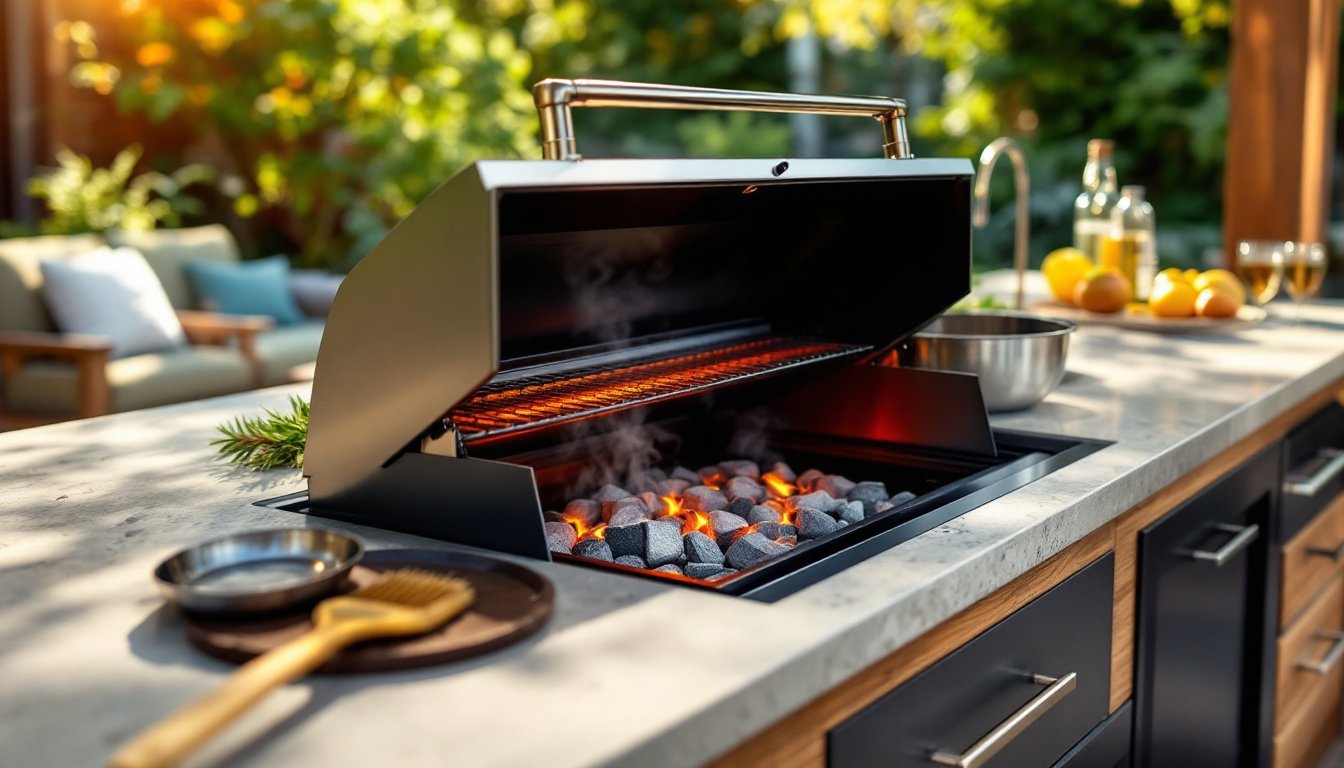
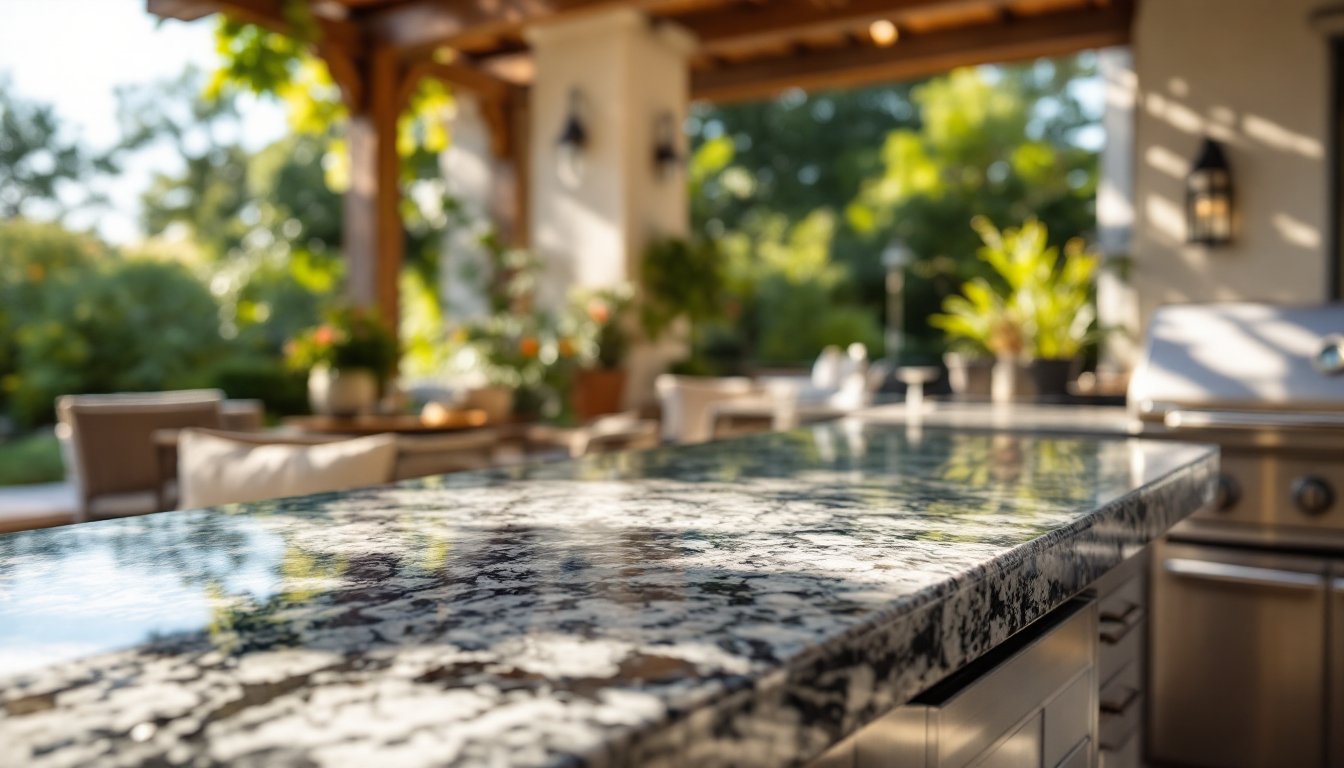
Granite is the gold standard for outdoor kitchen countertops, and for good reason. This igneous rock is incredibly hard, it scores 7–7.5 on the Mohs hardness scale, meaning it resists scratches better than most alternatives. It’s also naturally heat-resistant, so you can set hot cookware directly on the surface without concern.
Granite comes in hundreds of color and pattern options, from blacks and grays to reds, blues, and earth tones. Each slab is unique, which some homeowners love and others find unpredictable. The material does require proper sealing during installation and resealing every 1–3 years depending on your climate and use frequency. In coastal or freeze-thaw climates, annual sealing is worth the effort, it keeps water out of the microscopic pores that can expand and crack the stone.
The trade-off? Granite typically costs $40–$100+ per square foot installed, making it a mid-to-high investment. But, it’s nearly impossible to damage with normal kitchen use, and it holds its appeal for decades. If you’re viewing your outdoor kitchen as a long-term extension of your home’s entertaining space, granite countertops deliver both durability and visual appeal that justify the upfront cost.
Slate And Travertine: Character And Texture
Slate brings rustic texture and muted, sophisticated tones, grays, blacks, greens, and warm browns, that photograph beautifully and age gracefully. It’s metamorphic rock, which gives it natural layering that creates a handcrafted, non-slip surface. That texture, but, is a double-edged sword: it traps debris and requires more frequent cleaning than smooth stone.
Travertine is a sedimentary limestone that offers warm, earthy hues and a more refined aesthetic than slate. It’s softer and more porous than granite, making it vulnerable to etching (acid from citrus or wine leaves marks) and staining if not sealed carefully. Travertine shines in warm climates but struggles in freeze-thaw zones where water enters its pores, freezes, and causes spalling (surface flaking).
Both materials cost less than granite, typically $30–$60 per square foot installed, but they demand honest maintenance. Outdoor design inspiration from professional sources often showcases slate and travertine because they photograph well and create distinctive character. Just know that character comes with upkeep: frequent sealing, careful cleaning protocols, and acceptance that these softer stones will show wear and patina over time.
Bluestone And Flagstone: Budget-Friendly Options
Bluestone (a type of flagstone) is a quarried sedimentary stone that splits naturally into thin, workable sheets. It’s durable, slip-resistant, and typically costs $25–$50 per square foot installed, a significant saving over granite. Bluestone’s cool gray and blue tones are neutral enough to work with any design direction, and its rustic surface hides dust and minor scratches well.
Flagstone is an umbrella term for any flat stone that splits along natural planes, including slate, bluestone, and sandstone varieties. It’s affordable, attractive, and popular for outdoor spaces where a laid-back aesthetic fits. The downside: flagstone is more porous and softer than granite, so sealing becomes mandatory, and you’ll see more staining and wear in high-traffic zones.
Both are solid choices if your outdoor kitchen is in a low-freeze climate and you’re comfortable with visible patina. In freeze-thaw regions, water absorption poses a real problem, repeated freezing and thawing will eventually damage the surface. Think of bluestone and flagstone as “good-enough” materials that deliver style and functionality at a fraction of the cost, but they’re not the long-term, hands-off option granite offers. When you’re exploring outdoor living examples on a budget, these materials punch above their weight.
Installation And Maintenance Tips For Outdoor Stone
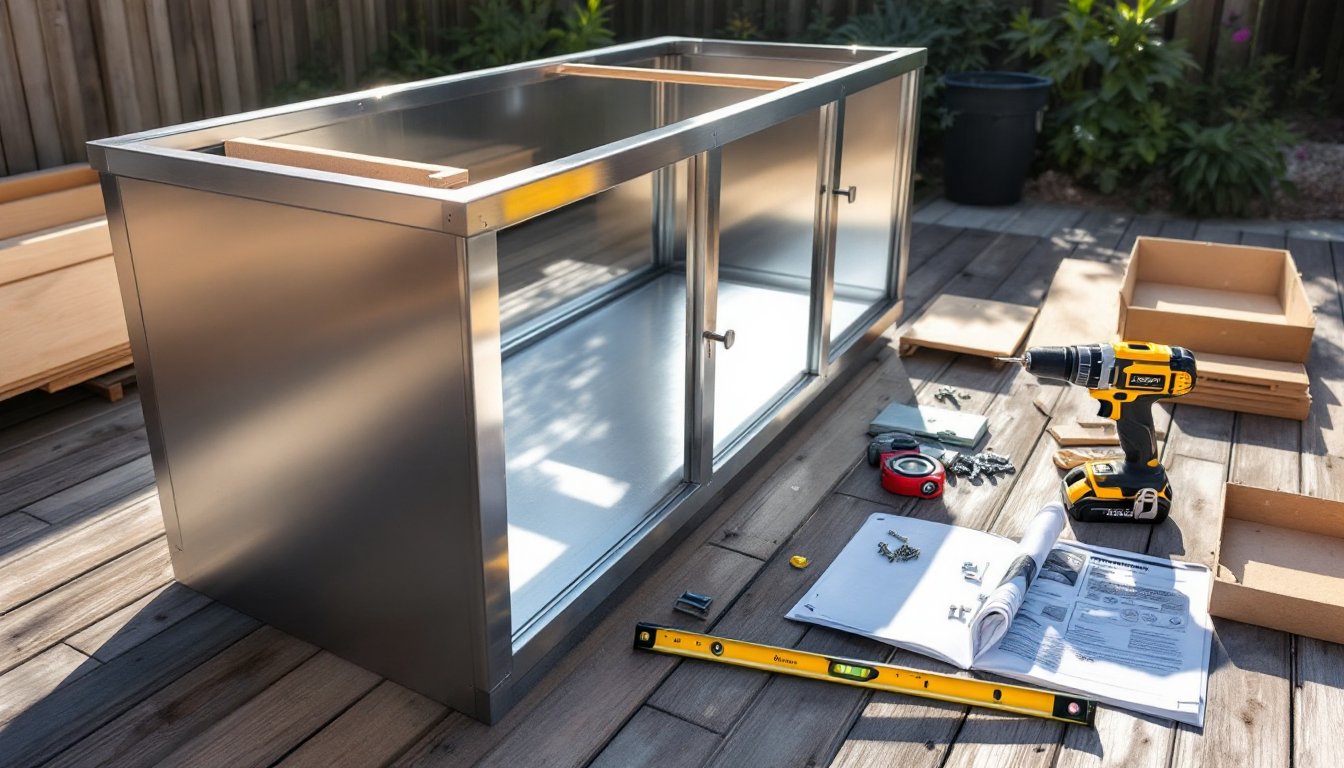
Installation is where stone countertops either succeed or fail. Hire a mason experienced with outdoor kitchen work, not just bathroom vanities. The installer must create proper slope (typically 1/8 inch per foot) so water drains away from the structure, set the stone on a solid base (usually concrete or a reinforced substrate), and ensure the supporting frame is level and can handle the weight, stone weighs 10–15 pounds per square foot depending on thickness.
Before installation, acclimate the stone to your outdoor climate for 48–72 hours. Stone expands and contracts with temperature, and sudden placement can cause cracking. All stone should be sealed before use, with the specific sealer matched to your stone type. Granite and bluestone need penetrating sealers: some travertine benefits from impregnating sealers that sit below the surface.
Maintenance is straightforward if you stay consistent. Wipe spills immediately, acidic foods and drinks etch softer stones like travertine and limestone. Clean regularly with pH-neutral stone soap (not vinegar or harsh cleaners, which break down sealant). Reseal granite and bluestone annually or as needed: test by dropping water on the surface and watching how fast it absorbs. If water beads and sits on top, you’re good. If it darkens the stone, resealing time. Professional outdoor kitchen guides stress that five minutes of preventive care per month beats hours of damage repair. In harsh climates, removing winter snow and ice with plastic (never metal) shovels protects your stone investment.
For natural stone joints, use exterior-grade epoxy or polyurethane grout designed for outdoor use, not standard mortar, which degrades quickly in weather extremes. Caulk the joint between your countertop and the supporting structure with a flexible, waterproof caulk, this is where water damage starts if you skip it.
Conclusion
Choosing stone for your outdoor kitchen comes down to matching material durability to your climate, budget, and maintenance tolerance. Granite delivers the best long-term value if you want something nearly foolproof. Slate and travertine offer character and visual warmth but require more care. Bluestone and flagstone provide budget-friendly durability for dry climates. Whatever you choose, proper installation and consistent sealing are non-negotiable, they’re the difference between a stone surface that lasts 20+ years and one that fails in five. Start by assessing your regional climate, then pick the material that aligns with both your aesthetic goals and your realistic willingness to maintain it.