Table of Contents
ToggleA BBQ island outdoor kitchen transforms your backyard into an outdoor living space that rivals any indoor setup, minus the walls and roof. Whether you’re hosting a summer cookout or grilling dinner on a Tuesday night, a well-planned outdoor kitchen puts everything you need within arm’s reach. This guide walks you through the essentials: what components matter most, how to lay out your space efficiently, which materials hold up to weather, and what you should actually budget for. By the end, you’ll have a clear roadmap to build or upgrade your backyard cooking zone.
Key Takeaways
- A BBQ island outdoor kitchen combines a built-in grill, countertops, storage, and utilities into a permanent yard fixture that boosts home value and extends your outdoor living season.
- Essential components include a drop-in stainless-steel grill, weather-resistant cabinetry, durable countertops (concrete, granite, or quartz), and a functional prep area with at least 24 inches of clear counter space beside the grill.
- Strategic layout—following an L-shape or straight line with cold storage, prep, grill, and cleanup zones—mirrors indoor kitchen logic and maximizes workflow efficiency.
- Material durability is critical: use pressure-treated lumber or marine-grade stainless steel for framing, stainless-steel fasteners, and sealed concrete or stone counters to withstand weather and UV exposure.
- Budget $3,000–$7,000 for a basic outdoor kitchen, $10,000–$20,000 for mid-range setups, and $30,000+ for high-end islands with pizza ovens and premium finishes; getting permits protects resale value despite upfront costs.
- Proper planning—including foundation support, ventilation, utility placement, sun exposure, and wind direction—prevents costly mistakes and ensures your BBQ island outdoor kitchen functions safely year-round.
What Is a BBQ Island Outdoor Kitchen?
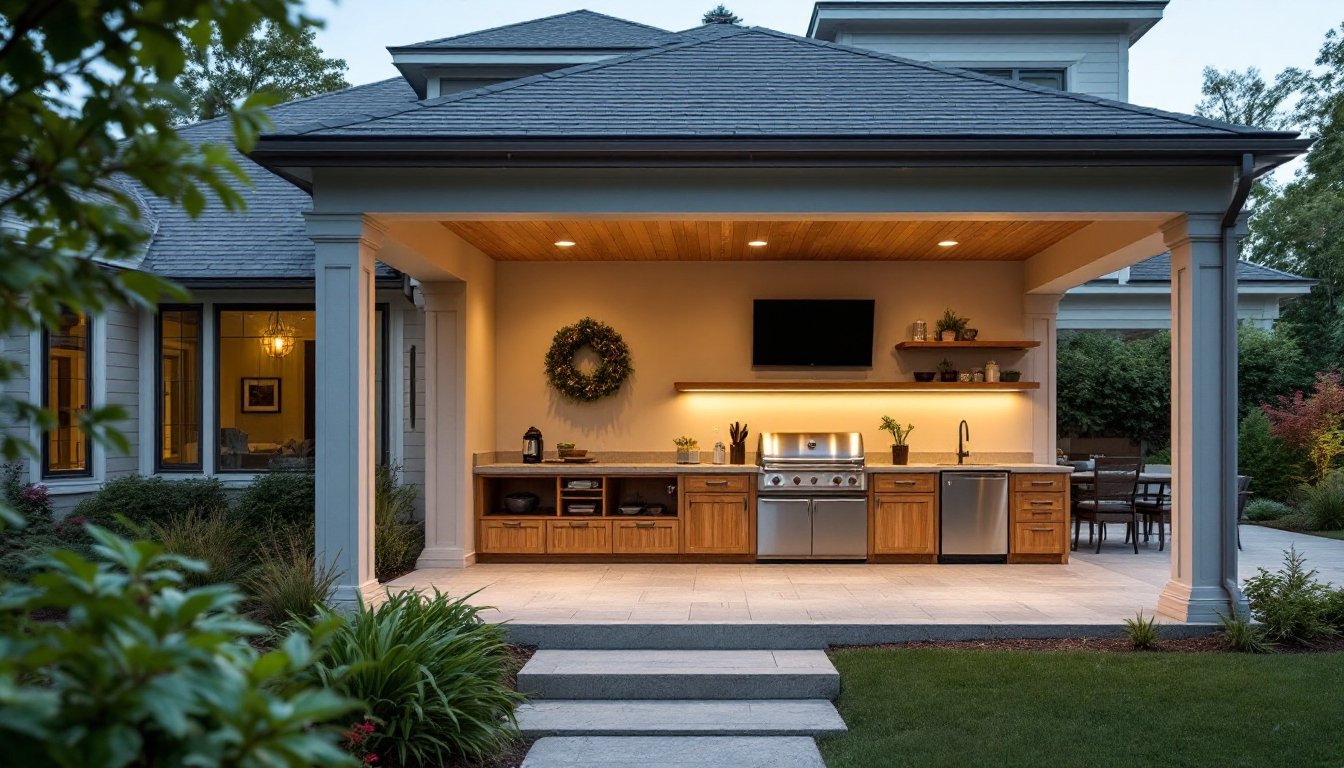
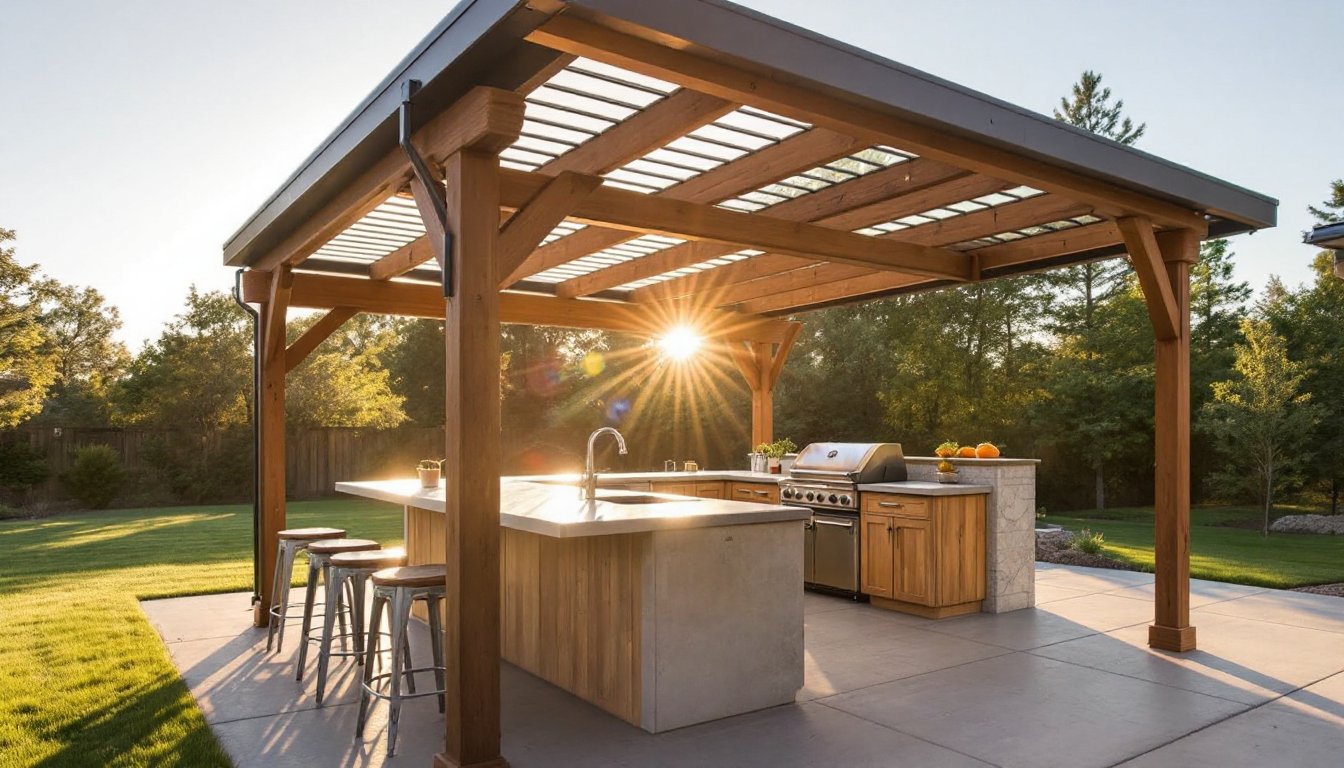
A BBQ island outdoor kitchen is a built-in, permanent or semi-permanent cooking and dining setup mounted in your yard. Unlike a portable grill, a BBQ island anchors multiple appliances and workstations in one spot, usually arranged in an island or peninsula shape. It typically includes a grill as the centerpiece, accompanied by side burners, a sink, storage drawers, counter space, and sometimes extras like a mini-fridge or pizza oven.
The appeal is obvious: you’re cooking outdoors without sprinting between the house and yard for ingredients, tools, or trash. Outdoor Living Examples to Transform Your Backyard show how these islands become genuine gathering hubs. A well-designed outdoor kitchen also boosts home value and extends your usable living space into fall and spring, not just summer.
These projects range from modest (a grill, counter, and basic storage cabinet) to elaborate (built-in pizza ovens, wine fridges, and bar seating). Most DIYers tackle islands that blend a quality grill, stainless-steel counters, and weather-resistant cabinetry. The key difference from indoor kitchens is material durability and drainage, everything must withstand rain, UV exposure, and temperature swings.
Essential Components You’ll Need
Grill and Cooking Appliances
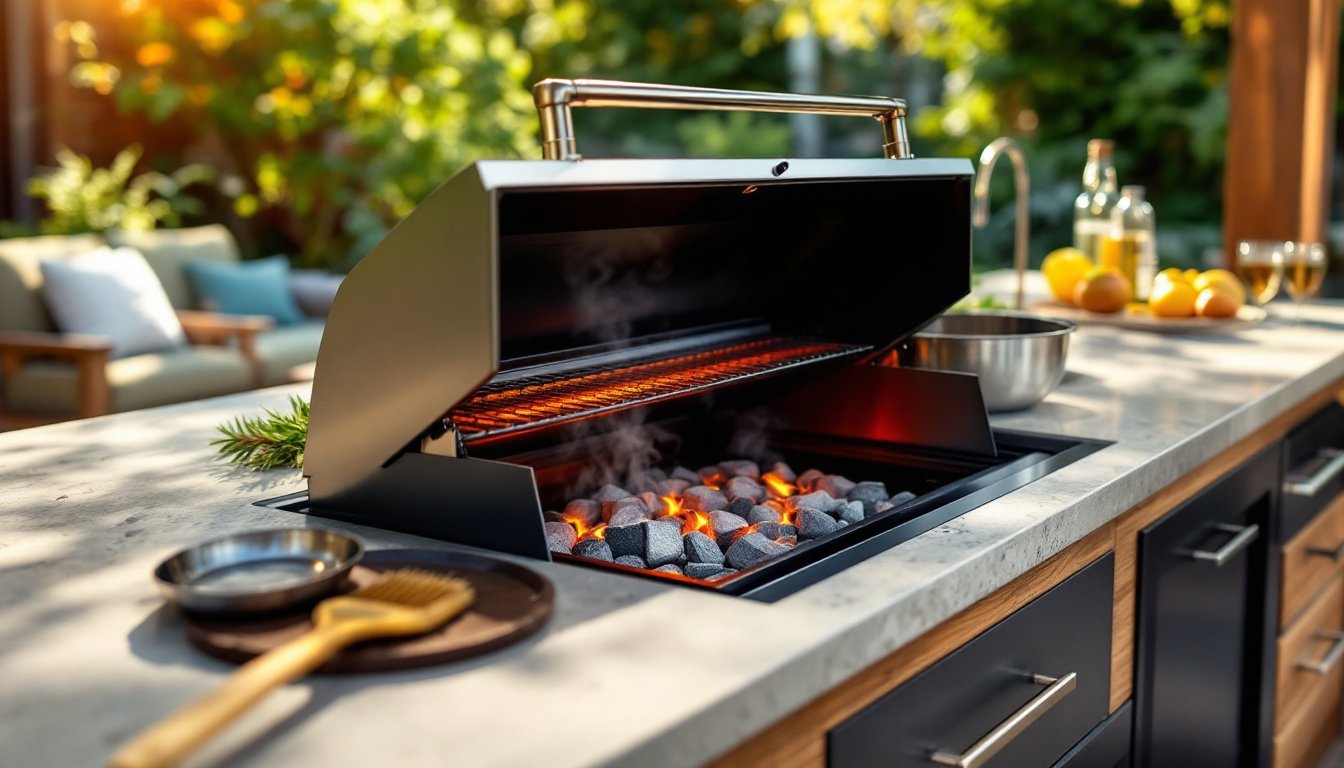
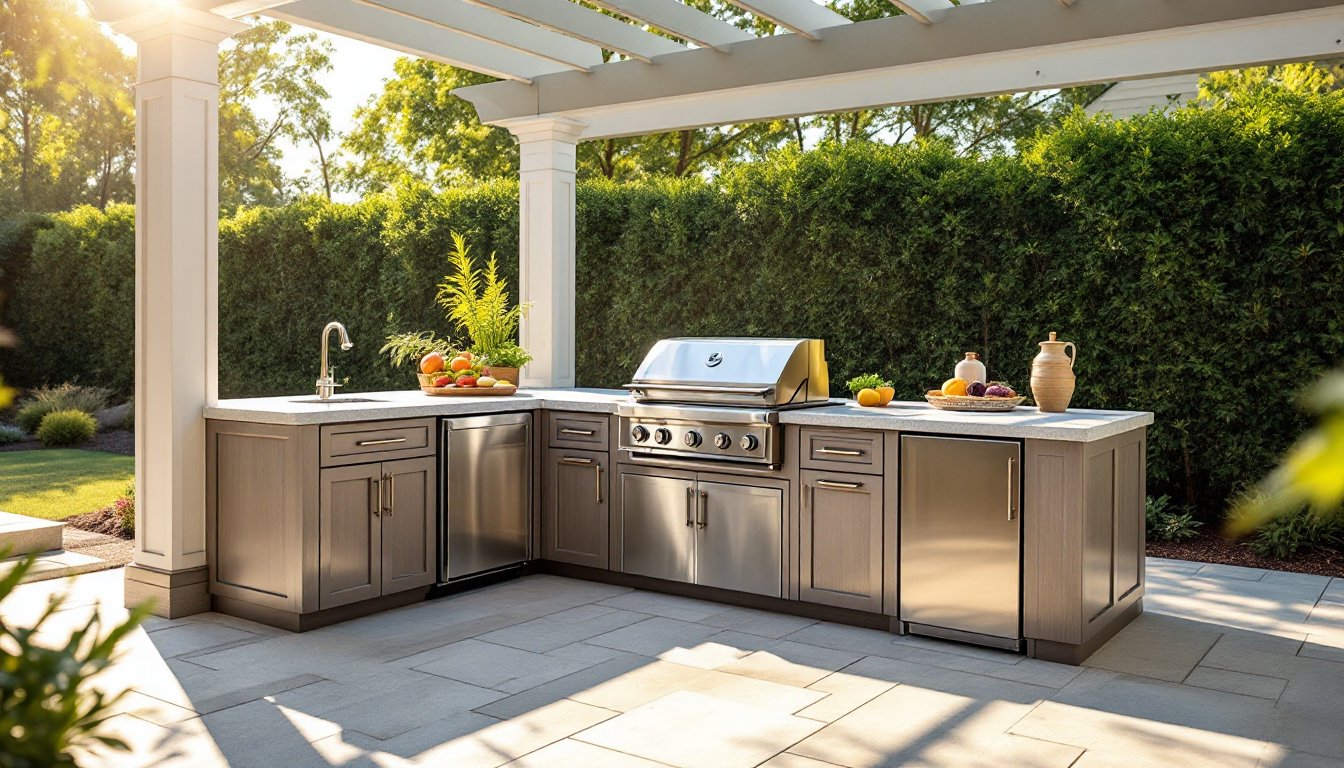
Your grill is the star. Most outdoor kitchens feature a drop-in gas grill (18–36 inches wide) that sits flush in the countertop, cleaner looking and more integrated than a freestanding model. Natural gas is more convenient than propane if you have a line to your yard: otherwise, propane bottles work fine. Look for stainless-steel bodies and grates: cast iron rusts quickly outdoors without constant maintenance.
Beyond the main grill, consider a side burner (integrated into the counter or in a separate unit). This handles pots, sauces, and plating without hogging grill space. Some builders add a rotisserie attachment or smoker capability, though those are optional upgrades. A pizza oven is popular but pricey ($1,500–$5,000+) and requires dedicated counter and ventilation space.
Storage, Countertops, and Prep Areas
Countertops typically run 24–36 inches deep and are built around your grill. Stainless steel is durable but scratches easily: concrete offers rustic charm and durability but needs sealing: granite and quartz are expensive but beautiful and low-maintenance. Whatever you choose, ensure it’s graded for outdoor use and can handle hot pans, tile and marble don’t handle heat well.
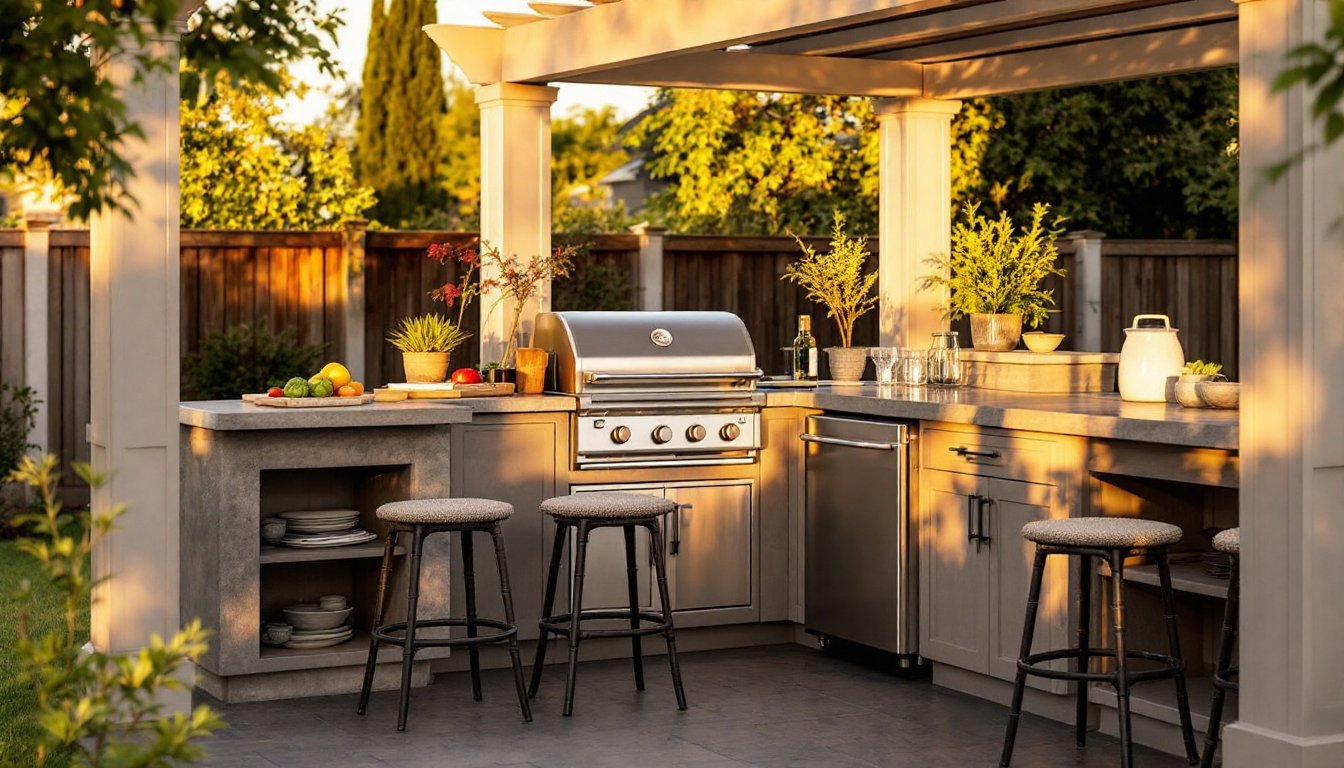
Storage is crucial. Invest in weather-resistant cabinetry with stainless-steel or marine-grade composite frames. Avoid standard wooden cabinets unless heavily sealed: they rot. Drawers should have soft-close hinges and solid bottoms (not mesh). A small refrigerator or beverage cooler fits perfectly under-counter. Don’t skimp on prep area, at least 24 inches of clear counter beside the grill prevents burns and makes cooking safer. Add a sink if water access allows: a simple cold-water line beats carrying dishes inside repeatedly.
Layout and Design Considerations
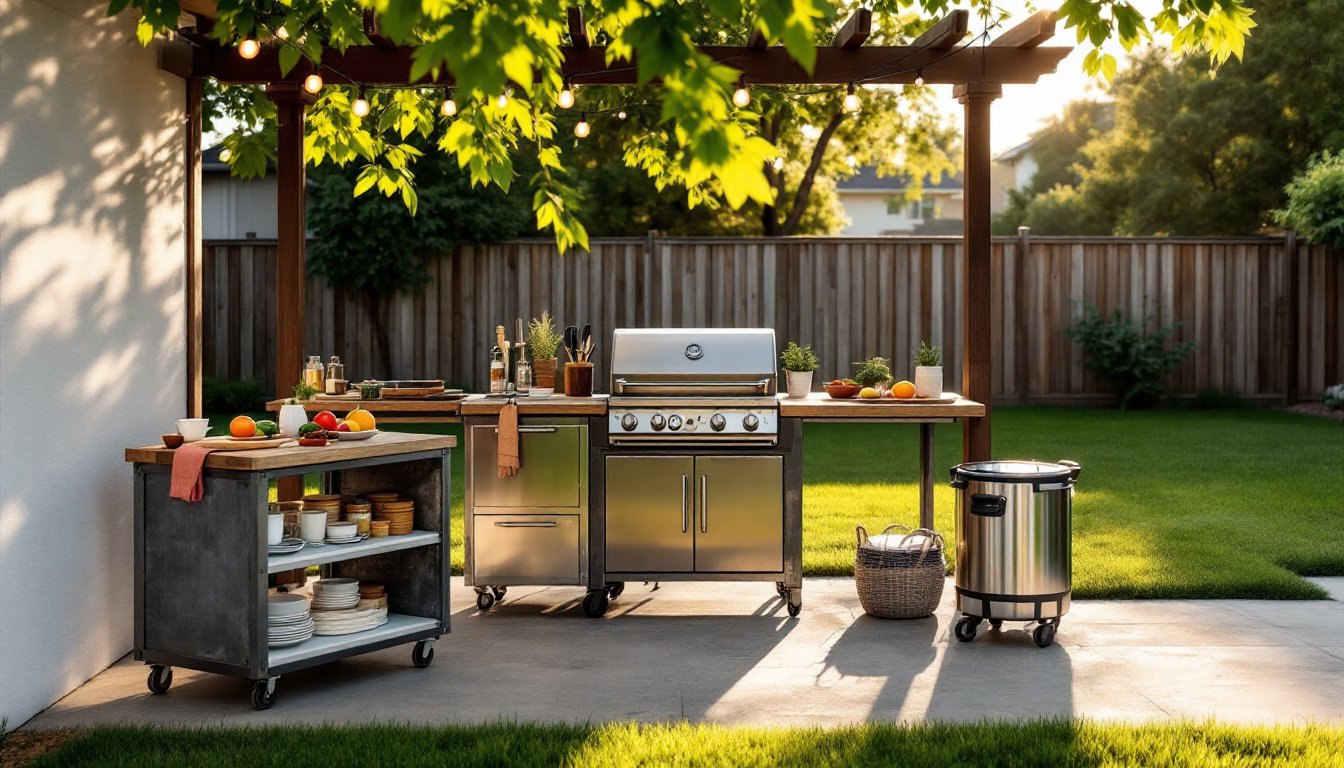
Your layout determines workflow and usability. The classic setup follows an L-shape or straight line: grill on one end, prep area in the middle, and sink or storage on the far end. This mimics indoor kitchen logic, cold storage/prep first, heat in the middle, cleanup last.
Sun exposure matters. A grill facing west catches afternoon heat, making cooking uncomfortable in summer: north-facing is often cooler. Consider a pergola or shade structure overhead if your yard lacks natural shade. Wind direction is equally important, if prevailing breezes blow smoke toward your house or neighbors, reposition if possible, or add a windbreak.
Counter height should match your indoor kitchen (36 inches is standard). Consistency prevents jarring transitions and works with your existing bar stools if you host. Leave at least 42 inches of clearance between the island and surrounding structures for movement. If you’re building on a deck or patio, ensure the subsurface can handle the weight of stone counters and cabinets, a loaded island easily weighs 2,000+ pounds.
Location proximity also affects permits and neighbor relations. Check setback requirements from property lines and ask about underground utilities before digging. Top Outdoor Living Ideas emphasize planning the sightlines and focal points of your yard layout beforehand.
Materials and Construction Tips
Start with a solid foundation. If building on grass or soil, pour a concrete slab (minimum 4 inches thick, reinforced with rebar). Drainage matters, slope the slab slightly away from the island so water doesn’t pool. If building on an existing patio, ensure it’s level and can handle the load: hire a structural engineer if unsure.
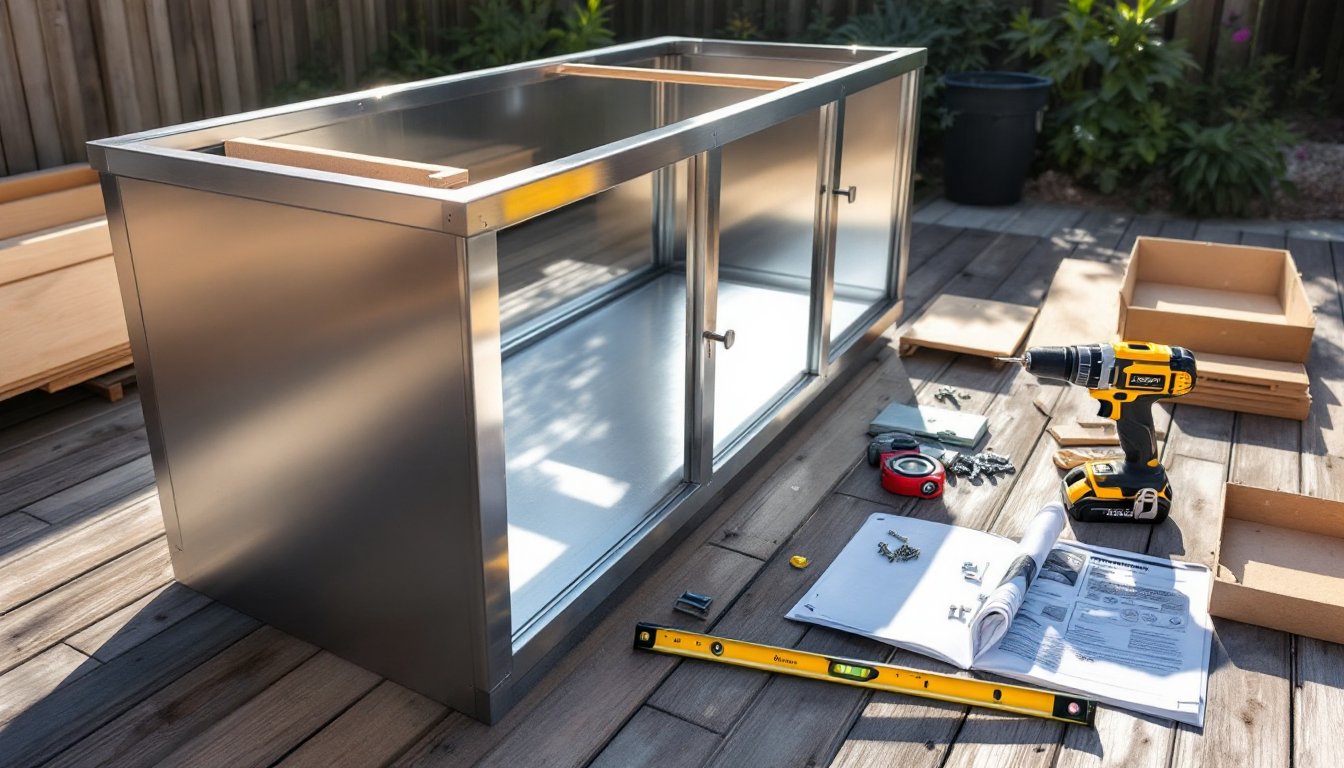
Framing is typically pressure-treated lumber or marine-grade stainless steel if you want longevity. Stainless costs more but never needs staining or sealing. Standard 2x4s or 2x6s work fine for cabinet frames, but every joint should be sealed or fastened against moisture. Use stainless-steel fasteners, regular nails and screws rust and stain countertops.
Ventilation is overlooked and critical. A grill produces smoke, heat, and moisture. Install a stainless-steel vent hood above the grill, vented outdoors (not recirculating). This protects your pergola from soot and makes cooking more pleasant. Wire the hood to a dedicated outlet if possible.
Utilities vary by project scope. A cold-water line to a sink requires trenching and is best done before building. Gas lines must meet local codes, hire a licensed plumber or gas fitter, not a DIYer: mistakes are dangerous and may void warranties. Electrical outlets (GFCI-protected) should be 6+ feet from water sources and installed by a licensed electrician in most jurisdictions.
Finish with sealers. Stainless steel doesn’t need sealing, but concrete, stone, and wood do. Designers share ideas for planning stylish and functional outdoor kitchens, including protective coatings that extend material life by years.
Budget Planning and Cost Factors
A basic outdoor kitchen (grill, counter, and simple cabinetry) runs $3,000–$7,000 if you build it yourself. Mid-range setups with granite counters, a quality grill, and a sink climb to $10,000–$20,000. High-end islands with pizza ovens, wine fridges, and premium materials can exceed $30,000 or more.
Break costs into categories: appliances (grill, side burner, fridge), structure (frame, cabinetry, deck/slab), countertops (concrete, stone, or composite), and utilities (gas line, water line, electrical). The grill alone ranges from $500 (basic propane) to $5,000+ (built-in luxury brands). Countertops consume 20–30% of the budget, don’t cheap out here: outdoor counters take abuse.
Material costs fluctuate by region and season. Stainless steel, for example, is pricier on the West Coast than the Midwest. Spring and early summer see higher prices due to demand: fall may offer deals. Get quotes from three contractors: hourly labor ranges from $50–$150 depending on location and contractor experience.
Permits add costs ($200–$1,500 depending on scope) but are worth it. A permitted build protects your home value and ensures code compliance. DIYers often skip permits to save money, but unpermitted work can block future sales or insurance claims. Check your local building department before breaking ground. Specialty outdoor kitchen features like pizza ovens and smokers are upgrades that inflate budgets but add genuine functionality and resale appeal if planned into the initial design.